

I’m sorry for the hiatus from writing I’ve had—it’s been a whirlwind of school ending at my year-long temp job, a crazy week of staff-meetings and after-school cleanup, then moving a couple towns over, getting settled into my summer job, picking up an internship, unpacking for the summer, and getting my life re-organized. I have had no time, focus or inspiration to write. But here we are, and I’m trying to get another post out before another week escapes me.
After three amazing days in Prague we packed up and headed south-east towards Budapest.
We stopped at a town called Terezín along the way. Terezín was a concentration camp / model Jewish town which was run by the SS in WWII. Since then, it has been argued what to do with it; keep the town as a historical memorial, let it fall into ruin or try to recover and run it as a town. None have really been done, and the town sits empty and bare.
The actual internment camp, sometimes referred to as Terezín and sometimes Theresienstadt, sits like a fort in the middle of a grass-field. The camp was hell for thousands of people, and for tens of thousands, the last place they saw. It was used for some POW’s during the war (Illegally, according to the Geneva Convention), as well as for Jewish prisoners.
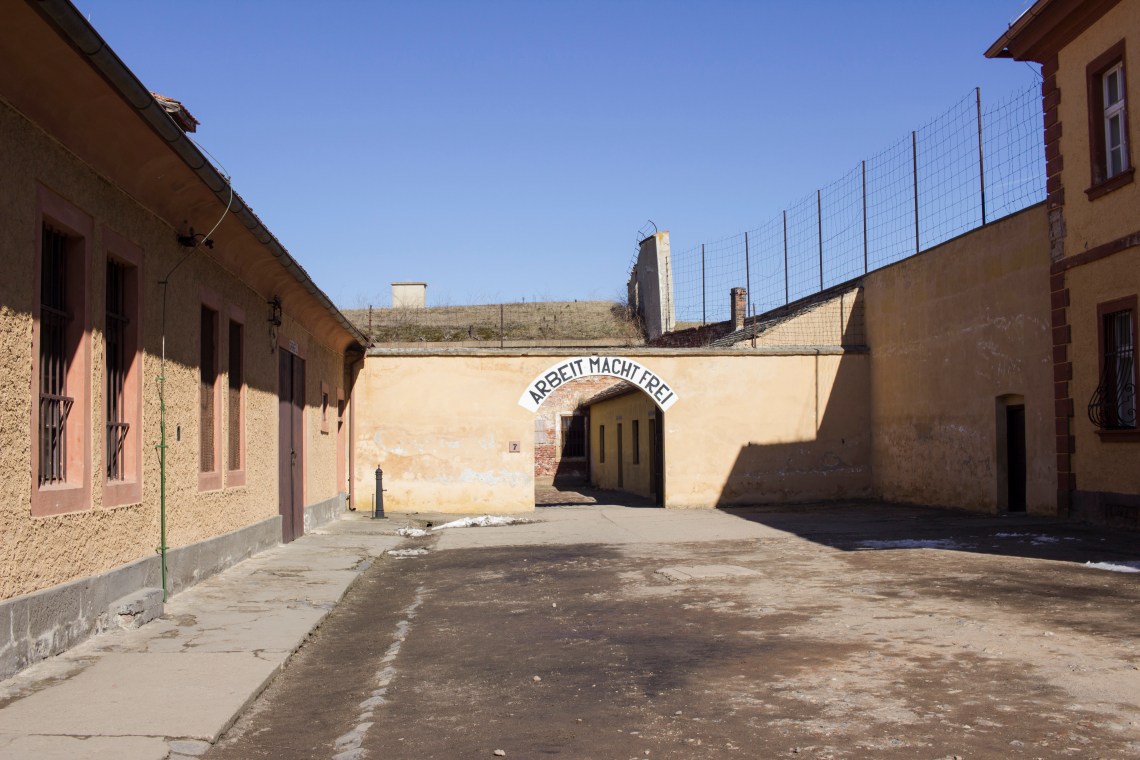 Theresienstadt Concentration Camp is much more foreboding than Dachau. Dachau commands silence; you feel that whispers are too loud and laughter a desecration of the reverence it commands. You feel somber and quiet and thoughtful. You know that terrible things happened there but you also know that they do not anymore.
Theresienstadt is eerie. Terrifying. Just as in Dachau, “Arbeit Macht Frei” is smeared across the arched entryway in thick letters. You walk under the words; the wall still topped with barbed wire, and a seed of hopelessness grows in your soul. The buildings are built like mole-hills, tunnels and brown stucco, topped with earth and grass. The brick is crumbling around the barred windows and the ground is bare.
There is a tunnel system that runs underground between the sections of the camp. I went throughpart it, but there are no doors. I ran so far, but never met the end. So, I turned around and scrambled back to the light. I don’t get claustrophobic, but I felt more trapped in that tunnel than I expected. No lights, no way out. Just the emptiness and the dark and the brick walls.
The barracks are empty; dusty and dark, filled with layers of dirt and tourist footprints. Even though there were several large groups of people there, something about Theresienstadt makes you feel alone.
Then we walked to the town of Terezín.
 The town was used by the Nazis as a propaganda tool for the Red Cross. The Nazis set up the town to appear as a happy place for the Jews to live in relative comfort. However, that was not the case. The town is a short walk from the concentration camp itself—maybe a half mile. It is surrounded by a ditch about 15 feet deep with the wall to the city on one side, a few hundred feet between, and another wall on the outside edge. It was built originally in the 1780’s as a fortress during the Austro-Prussian War.
It’s now a ghost town. No one inside, no one outside really. We got lost walking from one of the small museums to another (nothing is marked well) and ended up wandering through the town. I hated it; everything felt off. It felt like the part of the horror movie where the first one to die walks down the steps into the dark basement because “it’s probably nothing”. And I know I get freaked out easily, but there was just something that felt so unnerving about that town. The streets were empty; there weren’t really people or cars. There were a few store-fronts that were closed up, covered in dust as if they’d been closed since the town was abandoned. The buildings were strange. They were brightly colored, but had few real entrances, just barred windows on the bottom with an occasional door that looked like a fire escape.
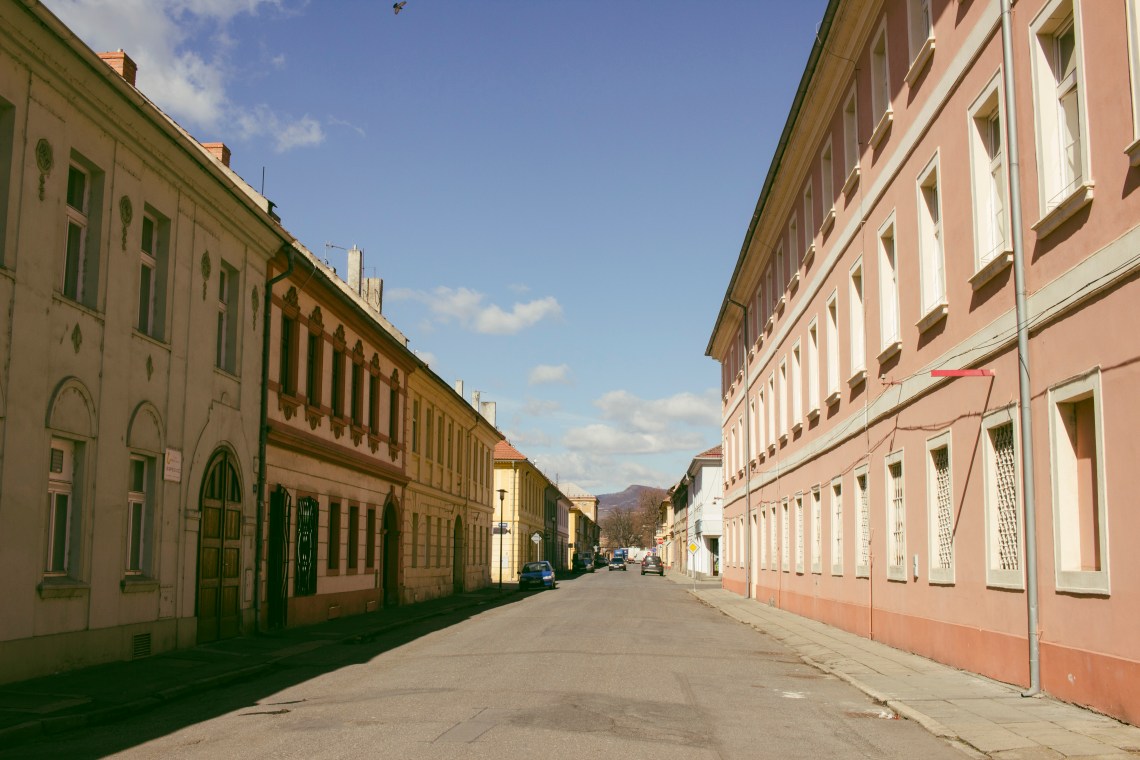
 I can’t really even put into words the feeling that this town put on me. I still can’t shake it, even now as I’m sitting down to write this. It’s just a pit-of-the-stomach, gut feeling that something wasn’t right about it. I don’t know if it’s because if what it was, or what it represents, but it’s haunted by the past. The horrors lie in its silence and its emptiness.
I hated being there and was unexplainably on-edge the whole time.
They do have a beautiful museum of artwork drawn by those who were in the camp during the war. The prison camp also has an extensive and informational museum, so if you’re there—I do recommend both museums.
Our second stop was much less perturbing—Karlštejn castle.
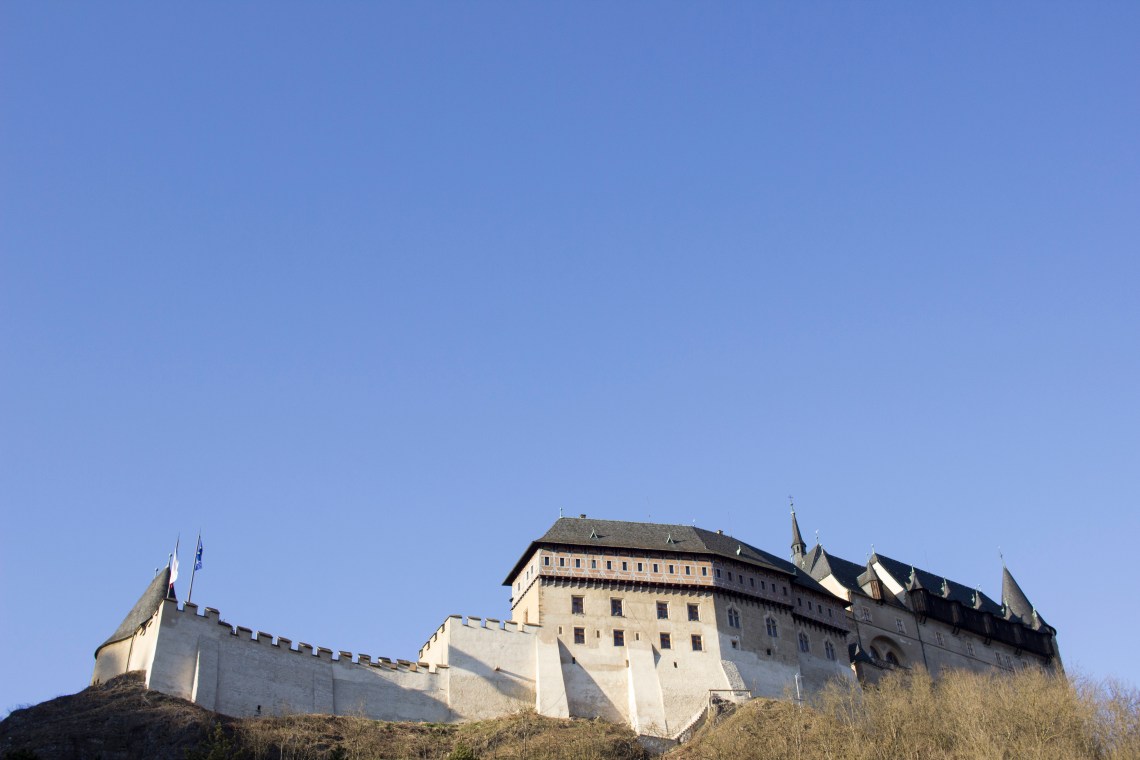 This gothic, hilltop caste was started in 1348. There’s a lot of history about it that I didn’t pay attention to on the tour, I will be honest. However, it is a really beautiful castle.
 One of the most interesting aspects of it is that it is built in pieces. Within the walls there are several different buildings connected by catwalks. These were originally made of wood, and if the castle was under attack, the residents could escape from one building to the other, and then burn the bridge between. There were no doors in the second structure, and the attacking forces had no way to get to those in the tower.
 I really love castles (almost as much as cathedrals). But I have to say that my favorite castle is still Neuschwanstein.
We left Karlštejn and arrived in Budapest at about Golden Hour. And that’s what got me. Nothing can make a photographer fall in love with a city more than beautiful light.


 Aperture & Eloquence
Always enjoy hearing about your adventures.
LikeLike