

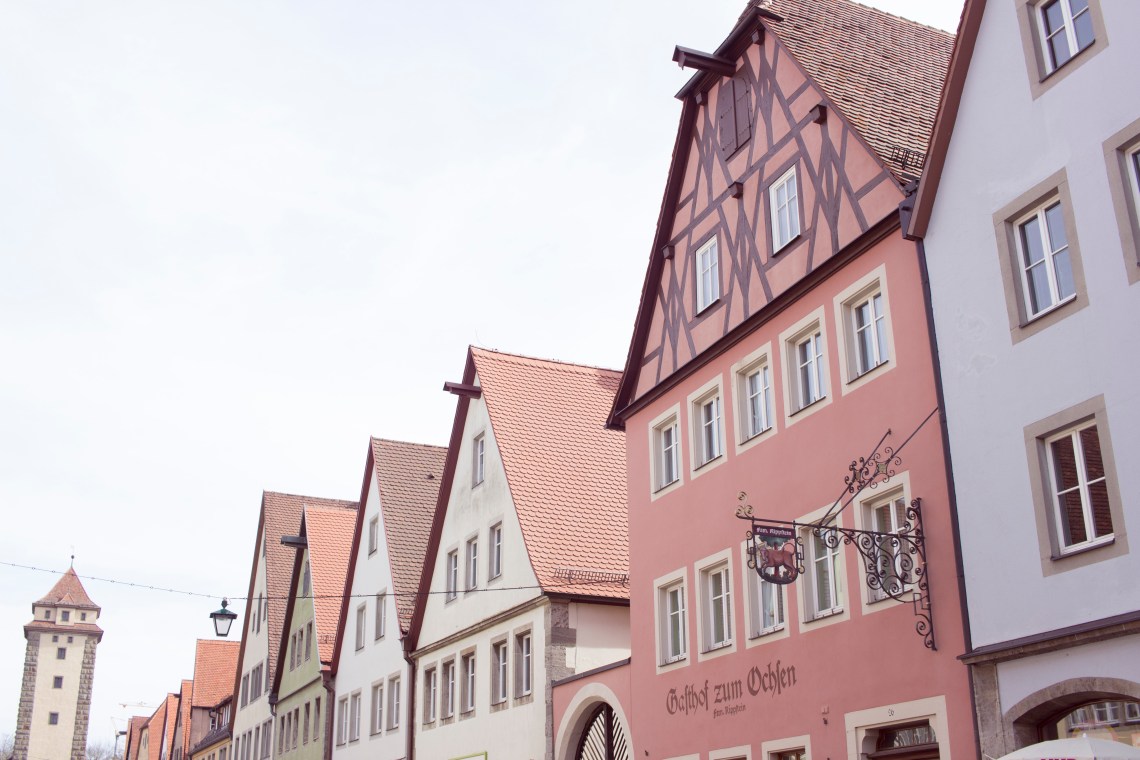
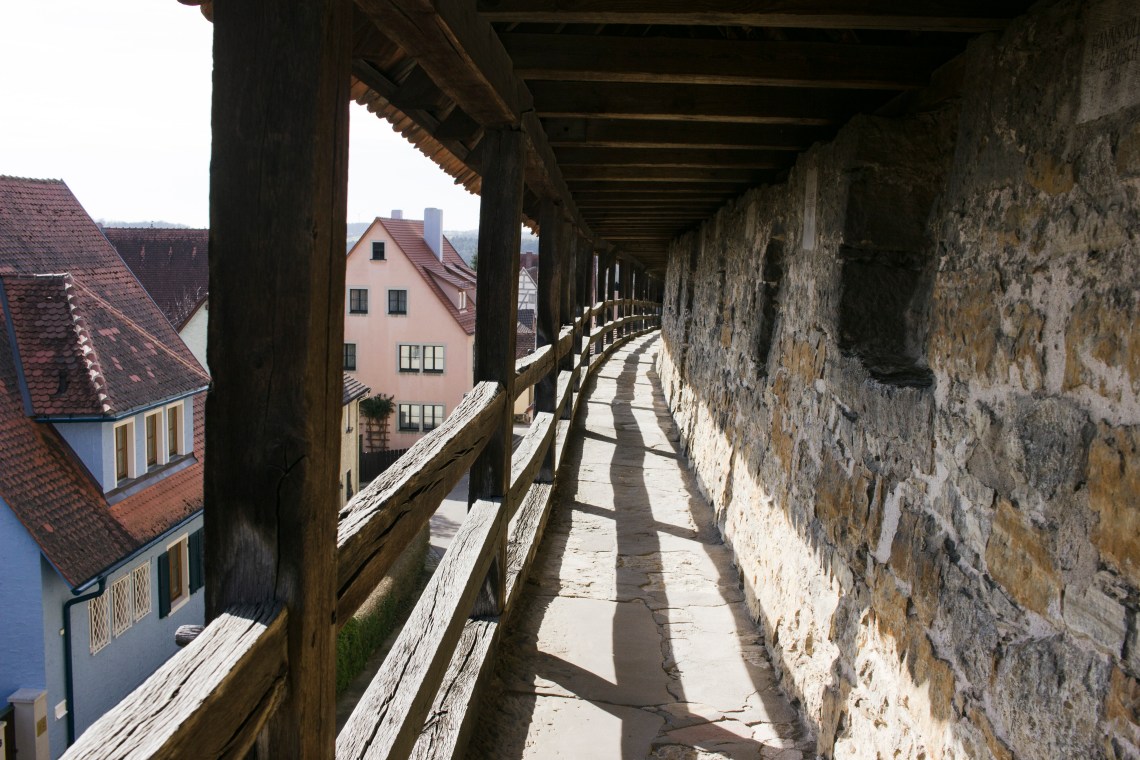
I have probably never in my life met a town with as odd of a combination of charm and stoic history as Rothenburg ob der Tauber, Germany. The beginnings of the town started around 950, saw the Thirty Years War, was Fetishized by Nazi Germany, nearly completely destroyed during bombing in WWII and now is a tourist attraction. The whole city is surrounded by a stone wall about 30 feet tall. The wall is wide enough to walk around the top for nearly the entire circumference of the city, and provides a great view of the city.
Rothenburg has an entirely different vibe to it than any other place I have ever been. All the houses are painted in pastels with tiny windows and orange terrocotta roofs. There are winding alleyways and all the streets are cobbled. We hit the city at a sleepy time—right after all its famous Christmas markets had closed and right before the Easter holiday brought in tourists crowds. We had the town pretty much to ourselves and saw few others; tourists or locals.
This was one of my favorite stops in Europe because we had the whole day to wander. I love getting to know a city’s twists and turns and quirky bits that give it character, and I have found that the best way to do that is to just walk. It is fun to see the tourist places, but I feel that the real personality of a city is hidden in its back streets and quiet corners.
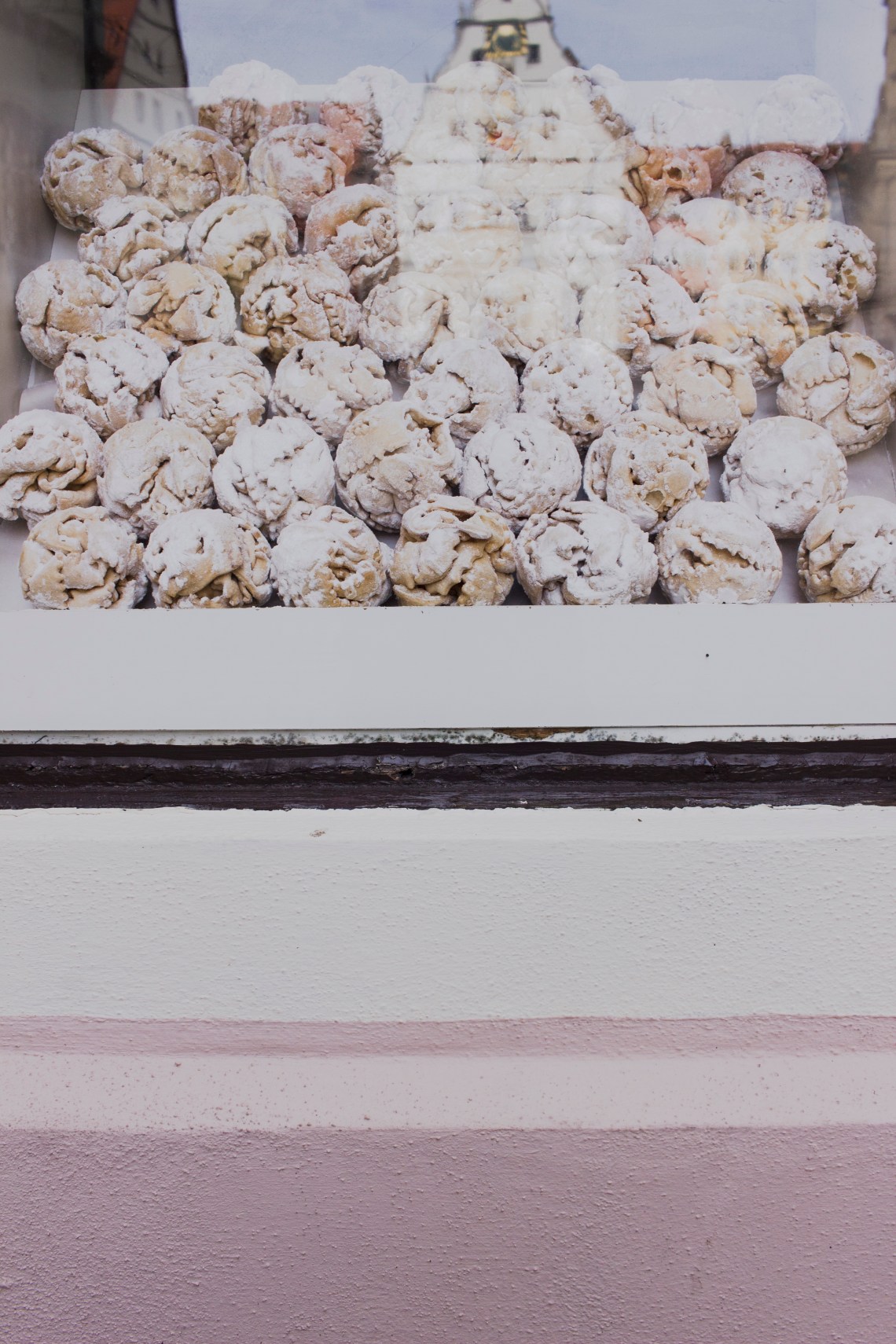
Unique to Rothenburg is a dessert called the “Schneeball”, or snowball, in German. These desserts are really similar to those crunchy, dry, fried Chinese cracker things you can get with takeout, covered in powdered sugar, chocolate or nuts. They’re crumbly dry, a safe foreign food adventure, and a good, one-time, buy.
That evening we got back on the train and headed to Füssen, Germany.
Füssen is wonderful.
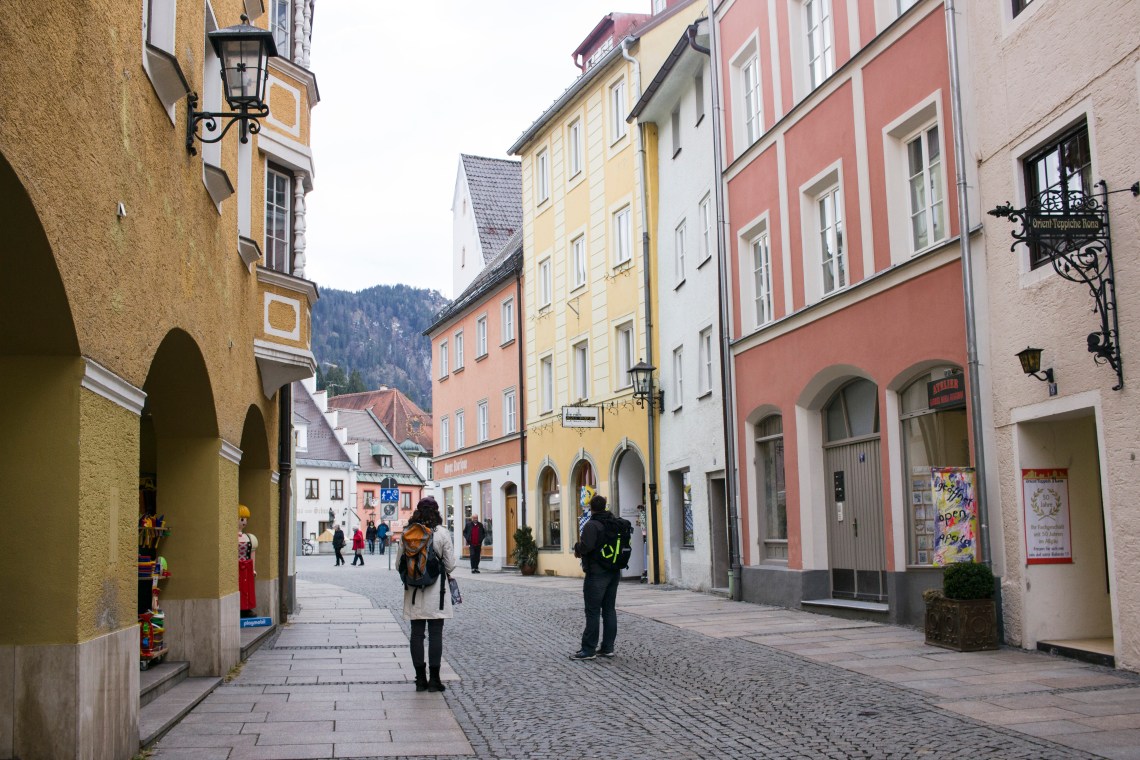
 We stayed in a Hostel near the center of town, run by a family who has lived in the town for 500 years. It carries the German architectural themes of pastel painted buildings and winding cobbled streets. It was cold and charmingly sleepy, though I’m sure summer crowds it with tourists.
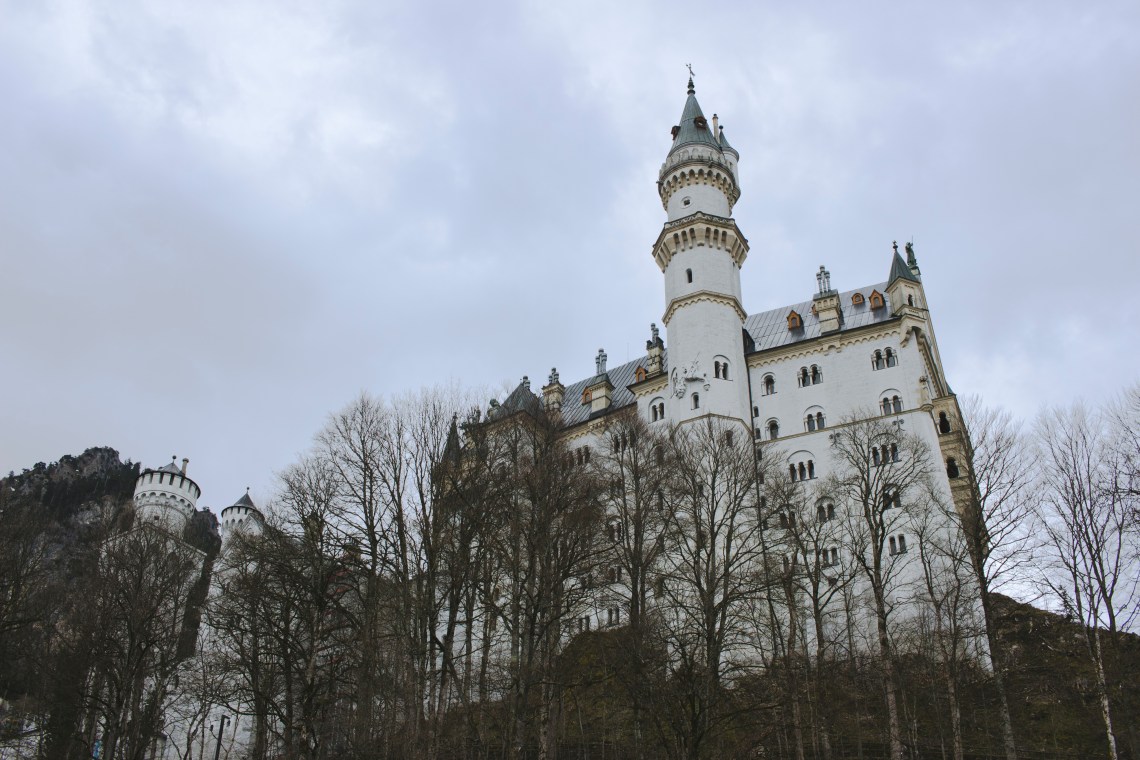
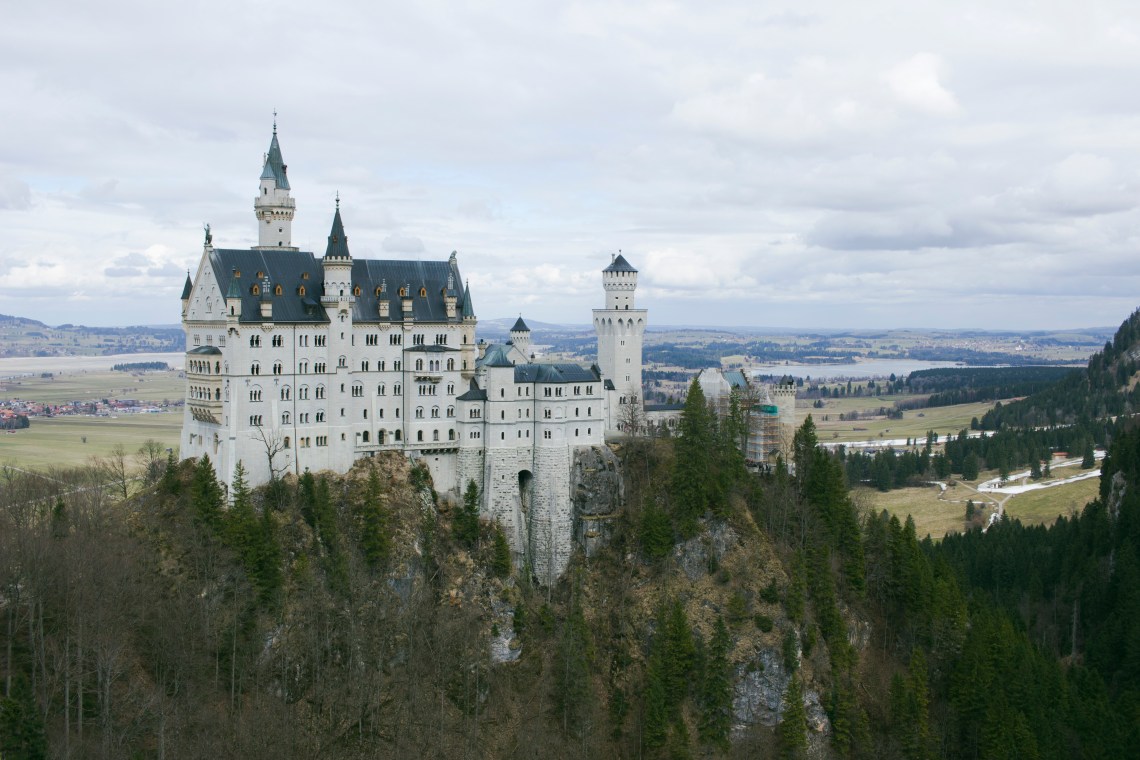
The main objective of stopping in Füssen was Neuschwanstein castle. This castle is literally out of a fairy-tale, with tall thin towers and lots of windows. It perches precariously on a mountain peak and behind it rise the snowcapped Bavarian Alps. It was built by Ludwing the II of Bavaria, who loved castles so much he built 3, was taken out of political power on account of “insanity”(AKA spending all the Bavarian State’s money on castles) and died mysteriously a few days after. His castle was then opened to the public.
The best part about the castle is the bridge overlook. There is a delicate steel bridge spanning the canyon between the mountains behind Neuschwanstein and from the bridge you get an amazing view of the castle and the flatlands below. It’s not ideal if you’re afraid of heights, as the canyon drops away hundreds of feet below, but I would recommend it for sure.
Germany makes a cold first impression, but the longer you stay there the better it gets.


 Aperture & Eloquence