

I’m not sure what the allure for Europe is. Maybe the thousands of years of civilized history that lies on its soil; that it has been home to two world wars, thousands of battles, seen countless men fall, been conquered, divided, reconquered and re-divided since time began. It has been the home of kings and princesses and knights and legends of saints and dragons. Maybe it’s the architecture and the aesthetic. The cities have cathedrals and palaces and skyscrapers all woven together in this fabric of old and new; ancient and modern. Maybe it’s simply the pull of a foreign land that draws us to Europe. The romantic idea of Paris, Barcelona, Venice, London, Budapest or Prague. There’s just something about traveling that makes one feel more like who we’ve always wanted to be—that person we’ve dreamed about being—and less of who we feel we are when we’re alone and when we’re sad. Traveling makes us realize that we are capable of doing the things we’ve always wanted; of being who we thought we couldn’t become; and of doing what we thought we’d never do. Traveling opens our minds to new people, experiences and thoughts that the stagnancy of living a daily routine kills. When we are in a foreign country we are no longer bank tellers, accountants, mechanics, baristas, or nurses. We leave behind our daily life chores and slide into this shell of who we really only allow ourselves to dream we can be.
And that’s why I went to Europe with 18 high school kids. Not because I thought it would be the adventure of a lifetime; but because it’s about making life experiences. It’s about growing from who we are into who we need to be, and it’s about experiencing that with as many people as we possibly can.
This post and probably the next couple will be about that trip.
We started our journey in San Francisco. Four of us flew separately from the main group—through a quick(ish) connection through Istanbul instead of a longer one through Heathrow. I can’t vouch for Istanbul’s airport being the nicest airport in the world, but they do have a lot of Turkish delight, and Turkish Airlines is my new favorite airline to fly with. Great service and good food (they’re not paying me to say this, but I’m working on it.)
The four of us, me, the volunteer boy’s dean, the principal and his son arrived in Munich that night, took the train to our hostel, and settled ourselves in. I managed to slip out on my own for breakfast the next morning, grabbed Starbucks (cliché I know, but I don’t speak any German so I figured I’d be safe trying something I knew was mediocre.) and some oranges from a harsh German lady selling them on the street.
That morning, after we rounded everyone up, we headed for Dachau Concentration Camp. It’s only a few train stops outside of central Munich. It was cloudy and colder than I had anticipated. I wasn’t wearing enough layers.
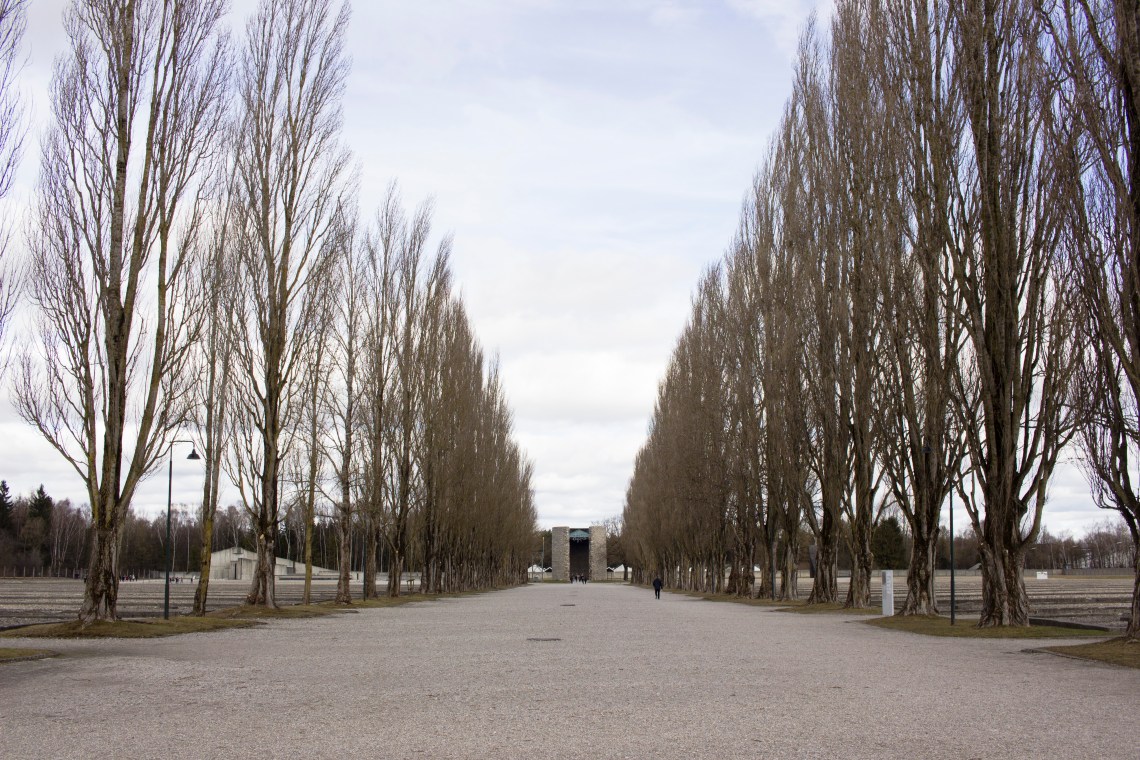
I don’t know if any of you have been to anywhere that makes you want to be silent. Almost like sound can’t survive there. Any noise is whisked away by the stillness. Arlington Cemetery, Yosemite, the Vietnam Memorial, the ocean at night, cathedrals. All places too beautiful and powerful to be contaminated with life’s chatter. Dachau feels the same. It’s a dark quiet; a haunted quiet. The compound is huge. Rimmed on all sides by a wall. One end has the main buildings, and the other has the crematorium and several religious monuments. Between the main building and the monuments lie the rows of barrack foundations. All but two of the buildings were torn down, but their cement foundations are still in place. The two standing barracks (not original) are cold and wooden and cramped, even when empty. They must have been hell to live in.
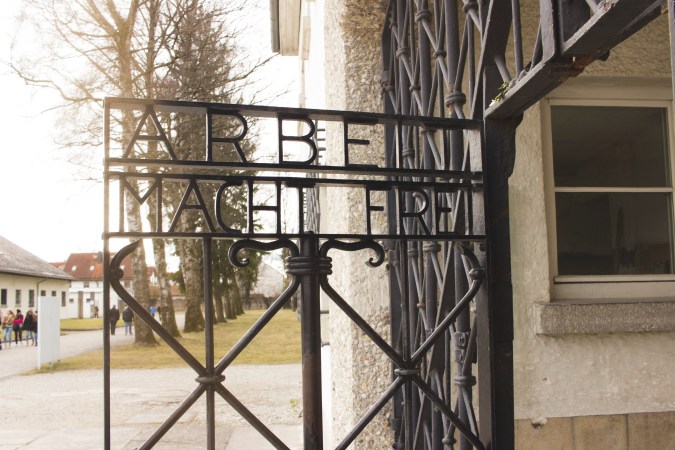
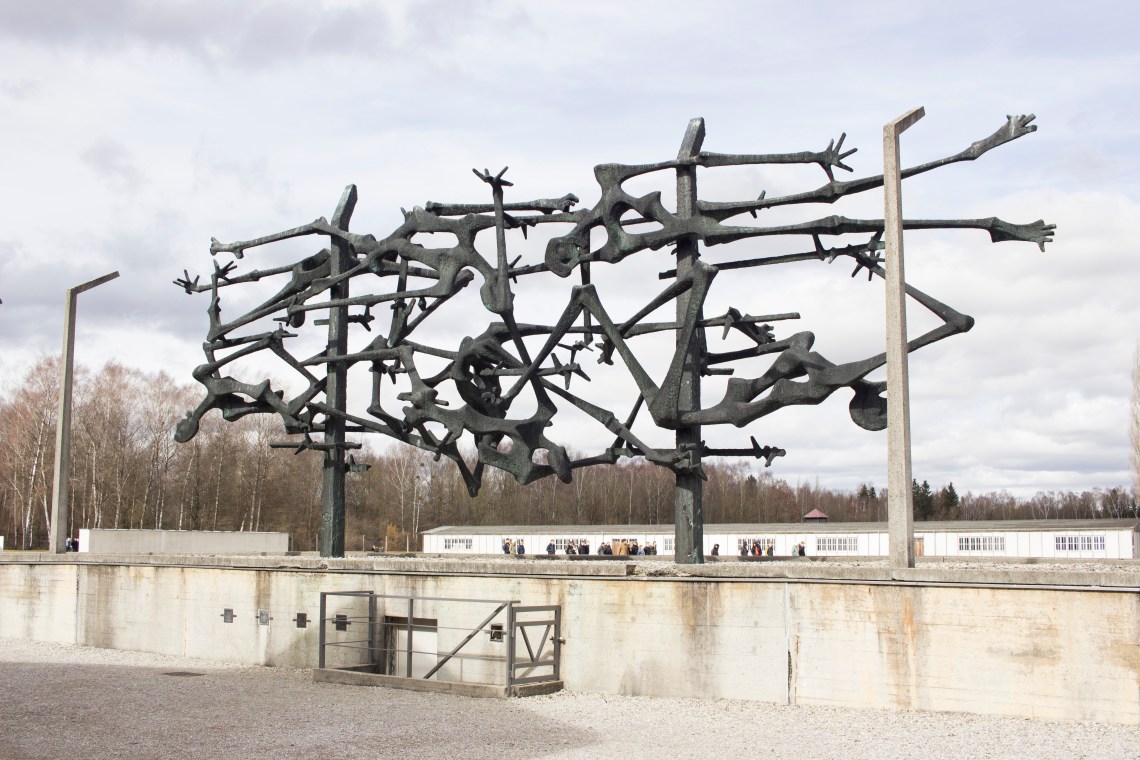
We walked down the corridor between the two sets of barracks—it makes a straight path from one end of the camp to the other. Through this section stand these tall thin trees, which were in many pictures of the camp during its use. The religious monuments at the end seem designed to fit the feel of the camp—haunting, detached and somewhat unwelcoming, but they draw you in just the same. I think it’s comforting to be near a place where God is supposed to live.
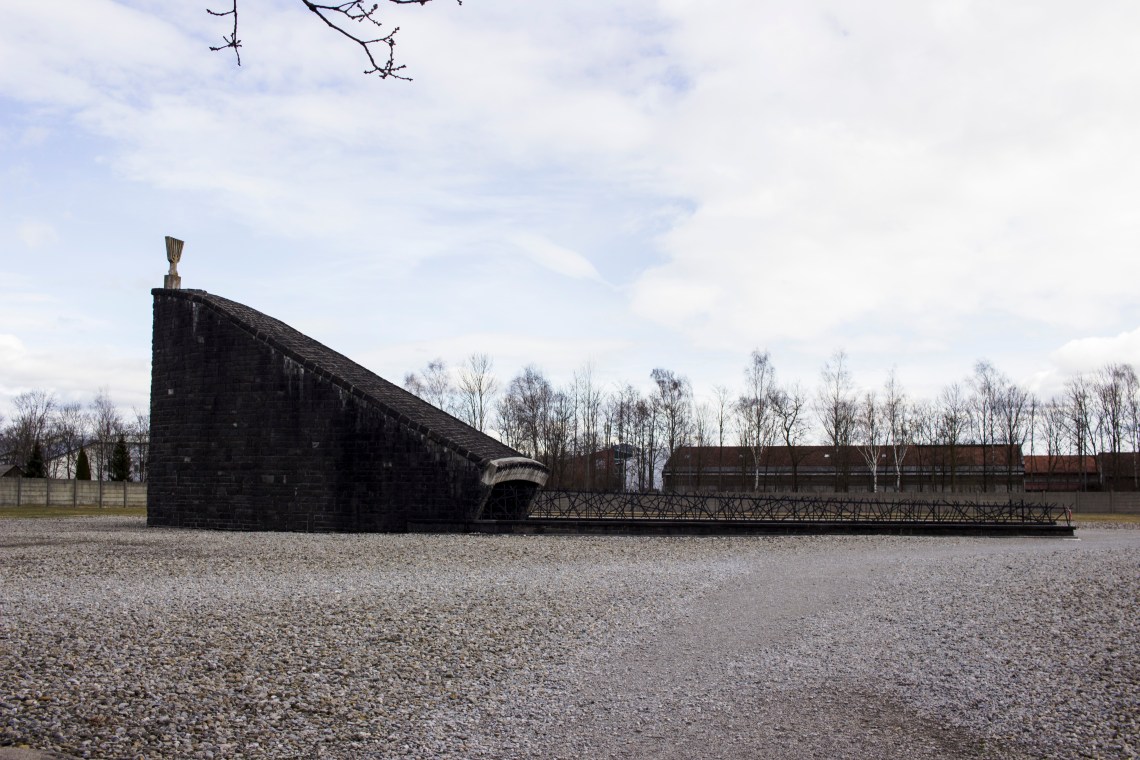
The Crematorium and outer edges of the camp are just as sobering as the barracks and the main hall. Nothing about being there makes you happy.
As we left it started to rain.
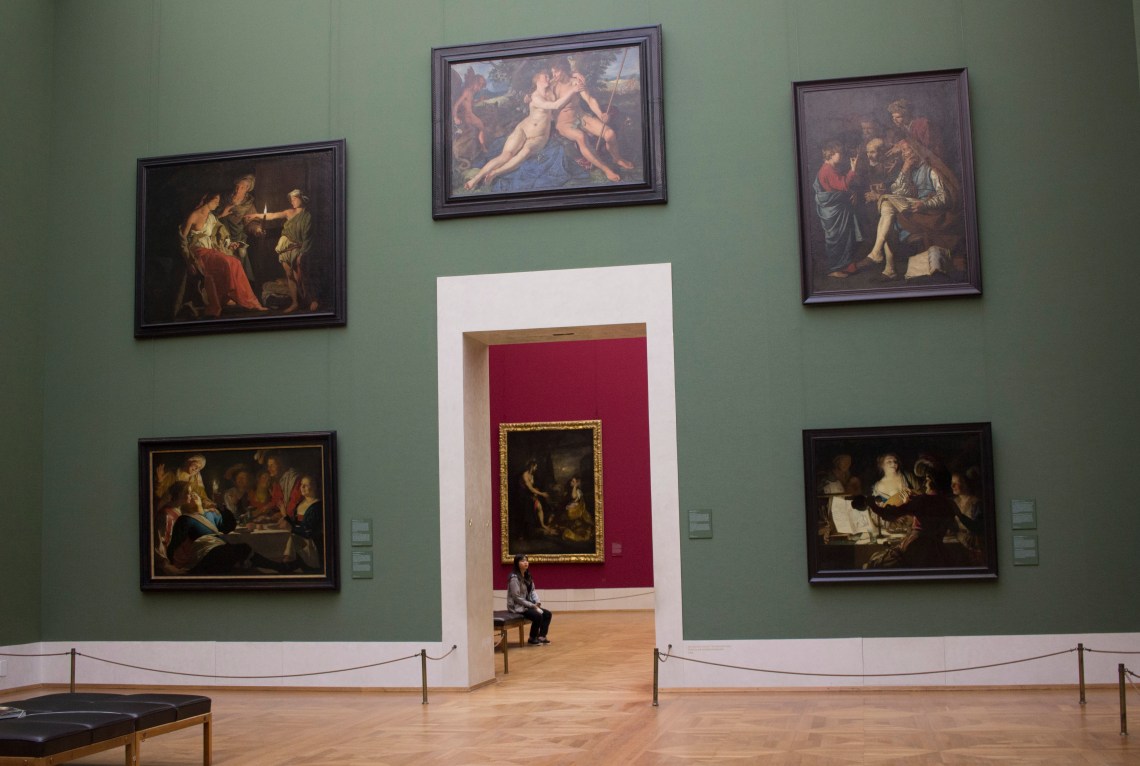
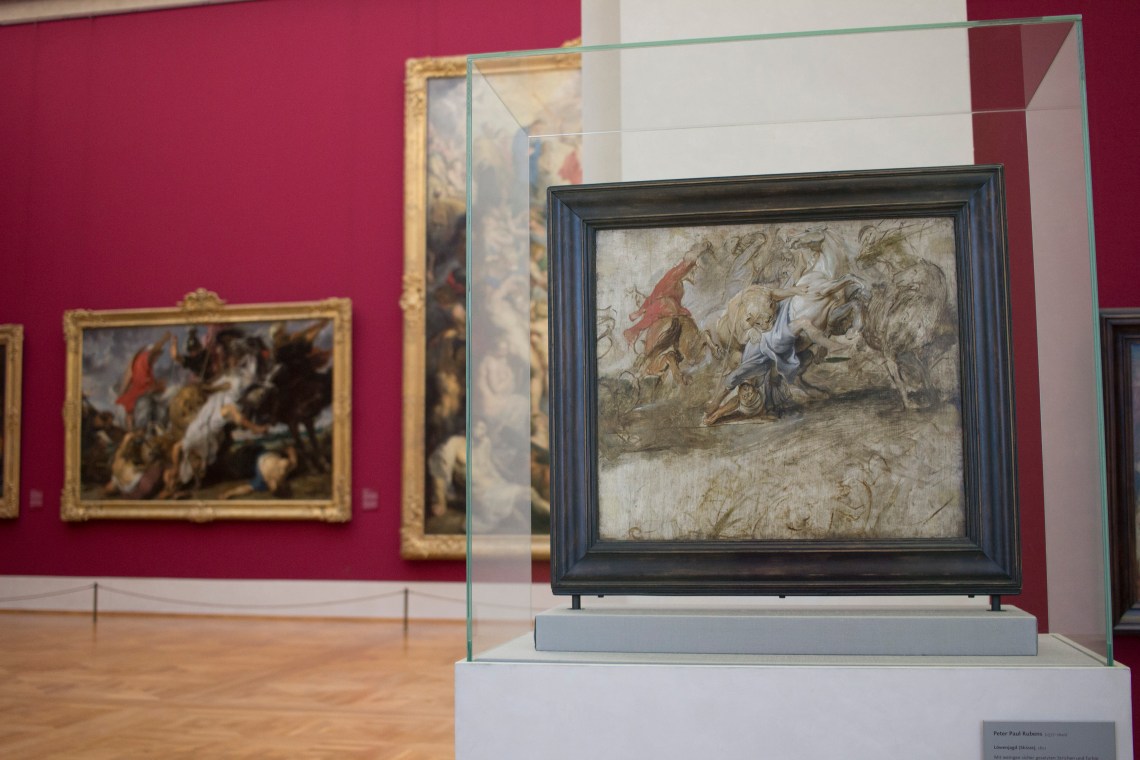
I want to end the post on a more positive note, so I’ll tell you that we did end up going to an art museum back in the city. I think it’s hard for most high schoolers to really appreciate art; I didn’t when I was that age. But it was an interesting museum just the same. They have Madonna of the Carnation by Leonardo Da Vinci, and that was pretty cool to see.
In Summary, that was day 1. I still haven’t fully processed how I feel about Dachau. It’s a terrible place, and part of me thinks that it shouldn’t be used as a constant reminder of the horrible things that happened there. But at the same time I also feel that we need it as a reminder, so that things like this don’t happen again. It’s important to not repeat history.


 Aperture & Eloquence